Disclaimer: This website provides health information for educational purposes only and is not a substitute for professional medical advice, diagnosis, or treatment. Always seek the guidance of a qualified healthcare provider with any questions you may have.
Fitness trackers promise more than step counts these days, with algorithms claiming to flag overtraining, elevated injury risk, and recovery status before you even feel sore. But how much of this is proven science, and how much is clever marketing built on incomplete data? If you are relying on a wrist device to tell you when to push and when to rest, it is worth understanding exactly what these tools can and cannot detect. This article breaks down what the research actually shows, where wearables fall short, and what to do when your body sends signals your device misses.
How Wearable Injury Predictions Actually Work
Most fitness trackers estimate injury risk indirectly, using proxies like heart rate variability, resting heart rate trends, sleep quality, and training load calculated from pace, distance, and elevation. Some devices layer in additional signals, such as skin temperature, respiration rate, or blood oxygen saturation, to flesh out the picture. None of these metrics measure what’s actually happening inside a joint, tendon, or muscle fiber. The device does not detect tissue damage or joint stress directly, it infers strain based on patterns compared to your recent history. For example, a “training load” score often compares your last 7 days of activity against your previous 28 to 42 days, flagging a spike if you’ve ramped up mileage or intensity too quickly. A readiness or recovery score, meanwhile, typically blends overnight HRV and resting heart rate against your personal baseline, not some universal threshold. When your readiness score drops or your strain number spikes, the algorithm is essentially flagging that your body is working harder than its baseline, not that an injury is imminent. A low readiness score might mean you’re fighting off a cold, slept poorly, or drank alcohol the night before, all of which shift HRV without any connection to musculoskeletal risk. The takeaway: these numbers are statistical inferences about systemic stress and fatigue, useful as an early warning system, but several steps removed from detecting an actual injury in progress.
Under the hood, most injury-risk algorithms are tracking variability rather than any single number. They compare your resting heart rate, heart rate variability (HRV), sleep duration, and training load against your own personal baseline, built from weeks of prior data. When several of these metrics drift in the wrong direction at once — say, HRV drops 15% below your norm while resting heart rate creeps up and sleep quality slides — the algorithm flags elevated strain before you consciously feel run down. This approach works reasonably well at spotting overtraining trends that build across weeks, like a runner quietly ramping up mileage 20% faster than their body is adapting to. But it struggles badly with sudden, acute injuries: a rolled ankle on a curb, a hamstring tear from an awkward sprint, a fall during a pickup basketball game. There’s no gradual data trend to catch because the injury happens in a fraction of a second, with no warning pattern in the days before it. That distinction matters because the two categories require completely different responses. A gradual overuse pattern, flagged over days or weeks, might warrant a lighter training week, extra sleep, or a chat with a coach about volume. An acute injury needs immediate hands-on evaluation from a medical professional — no amount of historical HRV data will tell you whether a swollen ankle is a sprain or a fracture.
Where the Data Falls Short in Practice
Wearable accuracy depends heavily on fit, skin tone, movement type, and even ambient temperature, all of which can throw off heart rate and sleep readings. Studies comparing consumer devices to clinical-grade equipment consistently find meaningful error margins, especially during high-intensity intervals or activities with a lot of arm movement, like weightlifting or racquet sports. This means the same reading that looks alarming one day might just be noise the next.
There is also the problem of individual baselines. A device trained on generalized population data cannot fully account for your unique physiology, medications, caffeine intake, or stress levels, all of which shift heart rate and recovery metrics independently of physical strain.
- Skin tone and tattoos can interfere with optical heart rate sensors
- Loose-fitting bands reduce data accuracy during movement
- Illness, alcohol, and poor sleep can mimic overtraining signals
- Cold weather may distort skin temperature and heart rate readings
- Algorithms rarely account for old injuries or chronic conditions
Recognizing Warning Signs Your Device Cannot Catch

Pain, swelling, and reduced range of motion are subjective experiences that no sensor currently measures, yet they are often the earliest and most reliable indicators of a developing injury. A tracker might show a normal recovery score while you are already favoring one leg or feeling a nagging ache in your shoulder. Learning to trust physical symptoms over a green checkmark on an app is one of the more important skills any regular exerciser can develop.
If you notice persistent stiffness, sharp pain during specific movements, or swelling that does not go down within a day, that is your body providing information no wearable can replicate. In these cases, a quick visit to a walk in clinic can help you get a professional opinion before a minor issue becomes a long-term problem. Catching these signs early is almost always faster and cheaper than waiting for symptoms to worsen.
When to Seek Immediate Medical Care
Some injuries are not ambiguous at all, and no amount of wearable data is relevant once you are dealing with a suspected fracture, severe swelling, or an inability to bear weight. In these situations, heading to the emergency room is the appropriate move rather than waiting to see how your recovery metrics look the next morning. Devices are built for pattern recognition over time, not for triaging acute trauma in the moment.
It helps to have a mental checklist for distinguishing a wearable-flagged fatigue issue from something requiring urgent attention. The following signs should never be brushed off in favor of checking an app.
- Visible deformity or intense localized swelling
- Inability to put weight on a limb or joint
- Numbness, tingling, or loss of sensation
- Pain that spikes suddenly rather than building gradually
- Symptoms accompanied by dizziness or fainting
Using Recovery Data to Build Smarter Training Habits
Even with their limitations, wearables are genuinely useful for spotting long-term trends, like a slow creep in resting heart rate or a consistent drop in sleep quality that lines up with heavier training blocks. Used this way, the data becomes a conversation starter with your own body rather than a verdict. Athletes who adjust training volume based on weekly trends, rather than single-day readings, tend to get more reliable results.
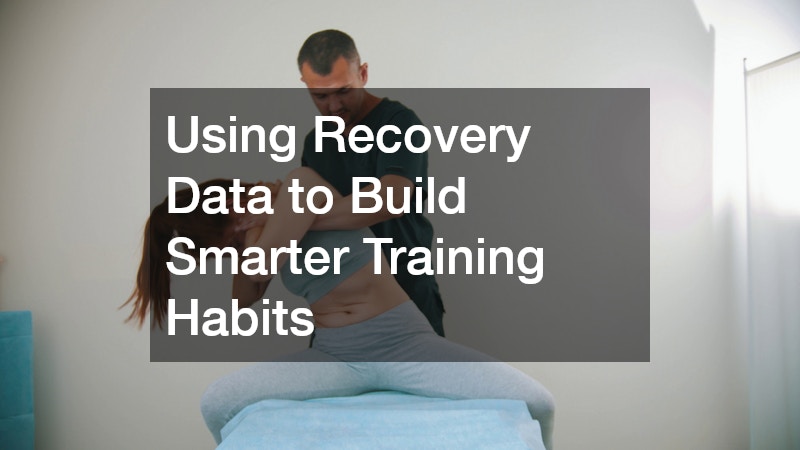
Pairing wearable insights with proactive physical maintenance tends to produce better outcomes than relying on data alone. Many people find that scheduling a regular sports massage helps address the muscle tightness and restricted mobility that trackers cannot quantify, while also giving a trained professional the chance to spot asymmetries or problem areas before they become injuries. Combining objective data with hands-on assessment gives a fuller picture than either approach alone.
What Wearable Data Means for Pet Owners and Multi-Species Households
Interestingly, activity tracking technology has expanded beyond humans, with collar-based devices now marketed to monitor a dog or cat’s movement, rest, and even scratching behavior. These tools face many of the same limitations as human wearables, offering useful trend data but little ability to detect acute injury on their own. Pet owners who notice a sudden drop in activity or limping should not wait for an app notification to confirm what is already visible.
If a pet’s behavior changes suddenly, such as reluctance to jump, noticeable limping, or whining when touched, seeking vet urgent care is a safer bet than watching an activity graph for confirmation. Just as with human wearables, animal tracking devices are best used for long-term pattern spotting rather than emergency decision-making.
Supporting Recovery at Home After an Injury Is Confirmed
Once an injury has been properly diagnosed, wearables can still play a supporting role by tracking sleep, mobility, and gradual return-to-activity metrics during rehabilitation. This is often the phase where consistent, low-pressure monitoring is genuinely valuable, since it helps flag overexertion during recovery without requiring constant clinical visits. Many people find comfort in seeing gradual improvement reflected in their data as they heal.
For injuries that require ongoing assistance, especially among older adults or those recovering from surgery, arranging a home care service can bridge the gap between hospital discharge and full independence. These services can help monitor mobility, manage medication schedules, and provide the kind of daily oversight that a wearable device simply cannot replicate. Combining professional support with data tracking creates a more complete recovery picture than technology alone ever could.
Fitness trackers are genuinely useful tools for spotting long-term trends, but they are not a substitute for how your body actually feels or for professional medical judgment. Treat wearable data as one input among many, not a definitive prediction, and always prioritize physical symptoms over algorithmic scores. When in doubt, seek out a qualified professional, whether that means bodywork, urgent evaluation, or ongoing support during recovery. The smartest approach combines the convenience of technology with the irreplaceable value of human expertise.